Total colonoscope ownership cost goes well beyond acquisition price. Capital planning decisions that ignore reprocessing infrastructure, repair frequency, scope compatibility, and end-of-life replacement cycles routinely underestimate true cost of ownership by 30–50%.
This guide breaks down the real cost drivers of operating a colonoscopy program — and where procurement strategy, refurbished equipment sourcing, and trade-in programs can reduce capital outlay without compromising clinical performance.
Key Takeaways
- Colonoscope total cost of ownership includes acquisition, reprocessing, repair, storage, and replacement — not just the purchase price
- Refurbished scopes from certified suppliers can reduce acquisition costs significantly versus OEM-direct pricing
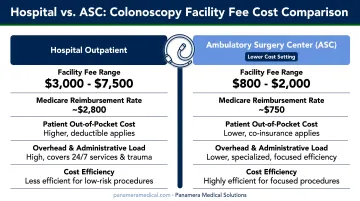
- Facility type (hospital outpatient vs. ASC) drives different equipment volume and reprocessing throughput requirements
- Scope-processor compatibility must be verified before procurement to avoid costly integration issues
- Trade-in and buy-back programs help facilities manage capital budgets during equipment refresh cycles
What Does Operating a Colonoscopy Program Actually Cost?
There is no single ownership number for a colonoscopy program. What a facility spends depends on procedure volume, scope fleet size, reprocessing capacity, and how equipment is sourced and maintained.
Acquisition: New vs. Refurbished Colonoscopes
OEM-direct pricing for a new colonoscope typically ranges from $20,000–$40,000+ per scope depending on model and generation. For facilities running 10–20 scopes, fleet replacement at OEM pricing represents a multi-million dollar capital event.
Refurbished colonoscopes — sourced from certified equipment suppliers and tested to functional equivalence — offer a cost-effective alternative. Certified Grade A refurbished scopes undergo comprehensive bench testing, leak testing, and optical and angulation verification before deployment.
Typical Per-Scope Cost Ranges by Procurement Channel
| Procurement Channel | Estimated Cost Per Scope | Notes |
|---|---|---|
| OEM-direct, new | $20,000–$40,000+ | Full warranty; latest generation |
| Certified refurbished (Grade A) | Significantly reduced | Functional equivalence verified; warranty included |
| Refurbished (Grade B) | Further reduced | Minor cosmetic wear; limited warranty |
| Trade-in credit applied | Variable offset | Existing fleet generates credit toward new procurement |
Suppliers like Panamera Medical Solutions help GI clinics and ASCs source refurbished colonoscopes — including the Olympus CF-HQ190 and Pentax EC-38-i10L — through trade-in and buy-back programs, keeping equipment current without the full capital outlay of OEM-direct purchases.
What Total Ownership Cost Typically Includes
A complete colonoscopy program budget should account for:
- Scope acquisition (purchase or lease)
- Automated endoscope reprocessor (AER) and reprocessing consumables
- Repair and preventive maintenance contracts
- Storage and drying cabinet infrastructure
- Processor and light source compatibility
Common budget oversights in capital planning:
- Reprocessing cycle costs per scope per day at volume
- Repair frequency and turnaround time impact on procedure scheduling
- Compatibility gaps when mixing scope generations or manufacturers
Key Factors That Drive Colonoscope Ownership Costs
Understanding these variables helps procurement teams build accurate capital budgets and avoid unexpected operational costs.
Facility Type: Hospital Outpatient vs. Ambulatory Surgery Center
Where procedures are performed determines the equipment volume and throughput requirements a facility must plan for. A 2023 Johns Hopkins analysis found hospital outpatient department facility fees run approximately 55% higher than ASCs — roughly $1,500 vs. $990 per procedure.
Higher facility revenue at hospital outpatient settings typically supports larger equipment budgets and broader scope fleets. ASCs operate leaner, making cost-effective procurement — including refurbished equipment — a strategic priority.
ASCs that maintain modern colonoscopes tend to achieve higher procedure completion rates, which reduces repeat procedures and maximizes per-scope revenue contribution. Equipment condition directly affects throughput.
Geographic Location and Procedure Volume
Colonoscopy procedure volume and reimbursement rates vary significantly by state and market. High-volume markets in urban centers typically justify larger scope fleets and more frequent replacement cycles. Lower-volume rural facilities benefit most from refurbished procurement and extended service contracts.
Scope-Processor Compatibility
One of the most overlooked cost drivers in capital planning is compatibility. Mixing scope generations or manufacturers without verifying processor compatibility can result in:
- Reduced image quality affecting diagnostic accuracy
- Inability to use advanced imaging modes (e.g., i-scan, NBI)
- Voided service agreements or warranty coverage
Before any scope procurement decision, compatibility with existing video processors and light sources must be confirmed. Panamera's procurement specialists verify compatibility across Olympus, Pentax, and Fujifilm endoscope and processor combinations before equipment ships.
Repair Frequency and Service Contract Structure
Colonoscopes are high-use instruments subject to regular wear, particularly at the insertion tube, bending section, and angulation mechanisms. Unplanned repair costs — averaging $1,500–$5,000+ per repair incident depending on damage type — can significantly impact annual operating budgets.
Facilities should evaluate:
- OEM service contracts vs. third-party repair coverage
- Loaner scope availability during repair turnaround
- Repair history disclosure when purchasing refurbished equipment (Grade C and above)
Complete Cost Breakdown: What Drives Per-Scope Facility Expenses
Total colonoscope ownership cost involves multiple budget line items across acquisition, operations, and end-of-life planning.
| Cost Component | Timing | Notes |
|---|---|---|
| Scope Acquisition | Capital / one-time | OEM-direct or refurbished; trade-in credit applicable |
| Video Processor & Light Source | Capital / one-time | Verify compatibility with scope fleet before purchase |
| Automated Endoscope Reprocessor (AER) | Capital / periodic | Throughput capacity must match daily procedure volume |
| Reprocessing Consumables | Recurring / per cycle | Chemistry, single-use components, water filtration |
| Preventive Maintenance Contract | Annual | Scope, processor, and AER coverage |
| Repair Costs | Variable | Frequency depends on scope age, volume, and handling |
| Storage & Drying Cabinets | Capital | Required for scope integrity between reprocessing cycles |
Reprocessing Infrastructure Costs
Reprocessing is one of the most significant recurring cost centers in a colonoscopy program. AER units capable of handling high daily scope volumes represent a major capital line item, and reprocessing consumables — high-level disinfectants, single-use components, water treatment — add ongoing operational cost.
Facilities expanding scope fleets must ensure reprocessing capacity scales proportionally. A fleet of 12 scopes running 40+ procedures daily requires AER throughput and turnaround times that a 2-bay reprocessor cannot support.
The Trade-In and Buy-Back Opportunity
End-of-life scope management is often overlooked in capital planning. Older scopes — even non-functional units — retain residual value through buy-back programs. Facilities can:
- Apply trade-in credit toward certified refurbished replacement scopes
- Receive cash buy-back for unneeded processors and light sources
- Reduce net acquisition cost on fleet refresh cycles
Screening vs. Diagnostic Procedures: How Classification Affects Equipment Planning
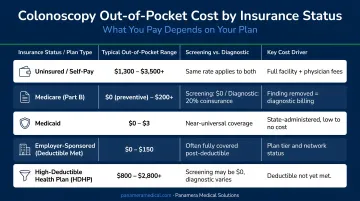
How a colonoscopy is classified — screening or diagnostic — affects reimbursement, which in turn affects capital budget capacity for equipment procurement.
A screening colonoscopy performed on an asymptomatic adult is reimbursed under preventive care frameworks. A diagnostic colonoscopy triggered by symptoms, prior findings, or positive stool tests carries different reimbursement rates and often higher acuity — placing greater demand on scope optics and therapeutic channel capacity.
Therapeutic Capability Requirements
Facilities performing high volumes of therapeutic colonoscopies (polypectomy, EMR, hemostasis) require scopes with:
- Larger working channels (3.7mm+) to accommodate therapeutic accessories
- High-angulation bending sections for complex anatomy navigation
- Robust insertion tubes suited to repeated therapeutic use
Procurement decisions should segment fleet composition between diagnostic-focused and therapeutic-capable scopes based on procedure mix. Panamera's team helps facilities assess scope specifications against their procedure mix before procurement.
Before finalizing procurement: Confirm that scope specifications align with the CPT code mix your facility bills — CPT 45378 (screening) through CPT 45385 (snare polypectomy) have different scope demand profiles. This alignment prevents equipment mismatches that reduce scope utilization efficiency.
How to Optimize Facility Equipment and Procurement Costs
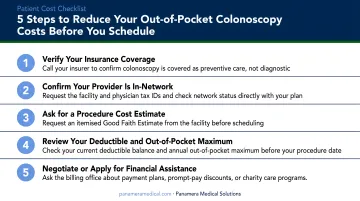
Each of these steps targets a specific point where colonoscope program costs can be reduced without compromising clinical outcomes.
Source certified refurbished scopes from verified suppliers for fleet expansion or replacement. Grade A refurbished units offer functional equivalence at significantly lower acquisition cost than OEM-direct pricing, with warranty coverage included.
Verify compatibility before every procurement decision: scope-to-processor, scope-to-AER, and scope-to-accessory. An incompatible scope fleet creates hidden costs in reduced image quality, workflow disruption, and service agreement gaps.
Use trade-in and buy-back programs to offset capital costs during refresh cycles. Existing scopes, processors, and light sources — even aging or non-functional units — retain residual value that can reduce net procurement cost.
Right-size your reprocessing infrastructure to your scope fleet and daily procedure volume. Undersized AER capacity creates reprocessing bottlenecks that directly limit procedure throughput and revenue.
Structure repair coverage proactively. Evaluate service contract options — OEM, third-party, or hybrid — against your facility's repair history and risk tolerance. Ensure loaner scope availability is included in any service agreement to protect scheduling capacity during repairs.
Frequently Asked Questions
What are typical acquisition costs for refurbished colonoscopes?
Certified refurbished colonoscopes are priced significantly below OEM-direct rates, with cost depending on scope model, generation, grade, and included warranty. Panamera Medical Solutions provides facility-specific pricing based on your fleet requirements and current trade-in inventory. Contact our procurement team for a current quote.
How does procedure classification affect equipment planning for facilities?
Screening-focused facilities typically require high-volume, durable scopes optimized for consistent diagnostic performance. Facilities with significant therapeutic procedure mix need scopes with larger working channels and high angulation. Procurement decisions should be driven by your CPT code mix and procedure volume rather than a one-size-fits-all approach.
Does Medicare reimbursement affect capital budget planning for GI facilities?
Medicare reimbursement rates for colonoscopy — both screening and diagnostic — directly affect per-procedure margin and, by extension, capital budget capacity. Facilities operating under tight Medicare reimbursement should prioritize cost-efficient procurement channels, including certified refurbished equipment and trade-in programs, to maintain equipment quality without overextending capital budgets.
What should facilities evaluate beyond scope acquisition price?
Total cost of ownership should include reprocessing infrastructure, preventive maintenance contracts, repair frequency and cost, storage requirements, and processor/light source compatibility. Facilities that evaluate only acquisition price routinely underestimate colonoscope program operating costs by a significant margin.
How can facilities estimate total colonoscope program costs before procurement?
Start with your annual procedure volume, scope fleet size, and reprocessing throughput requirements. Layer in repair history data from your existing fleet, current maintenance contract costs, and any compatibility constraints from your processor infrastructure. Panamera's specialists can provide a facility-specific cost model to support capital planning decisions.
What is the difference in equipment requirements between hospital outpatient and ASC colonoscopy programs?
Hospital outpatient departments typically run higher-acuity and more complex therapeutic procedures, requiring broader scope fleet diversity and higher therapeutic capability. ASCs tend to optimize for high-volume screening and diagnostic efficiency, making standardized, cost-effective scope fleets — including certified refurbished equipment — a strong fit for their operational model.